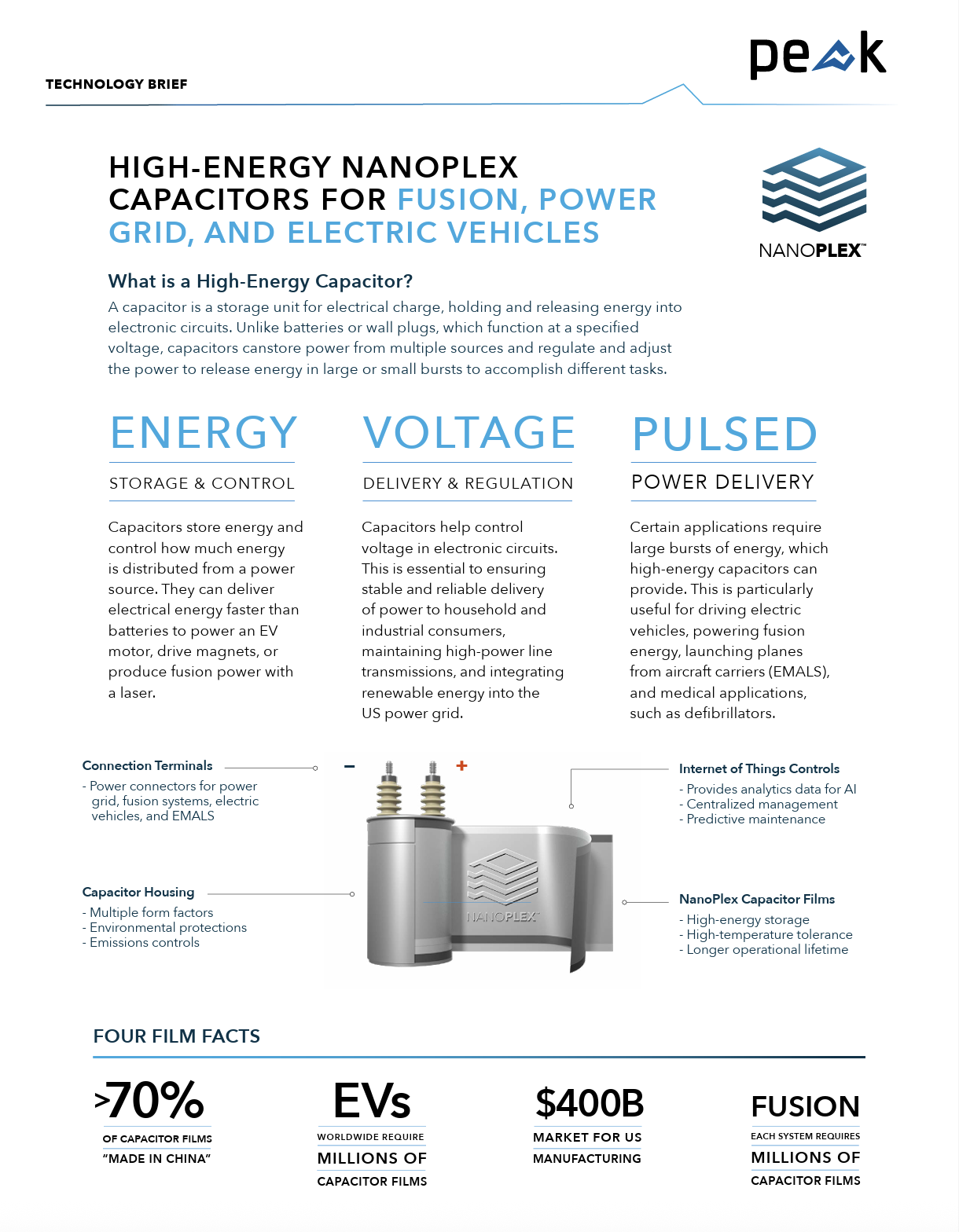
NanoPlex™ in Action: Optimizing Key EV Applications
Peak’s NanoPlex™ Films: Extending Range and Performance for EV Drivetrains
Peak NanoPlex LDF capacitor films maintain full capacitance up to 135°C with no derating and operate with ultra-low loss, reducing self-heating and inefficiency in 800–900 V inverters. By enabling fewer capacitors and less cooling, NanoPlex lowers system weight and cost while extending driving range, improving acceleration response, shortening charge times, and enhancing long-term reliability.
- Full-capacitance operation up to 135°C with no derating, more thermal headroom
- Up to 5x longer service life extends reliability under high temp/ripple duty
- 50% lower dissipation factor lowers self-heating for reduced cooling hardware needs
- Stable long-term performance for extended battery life
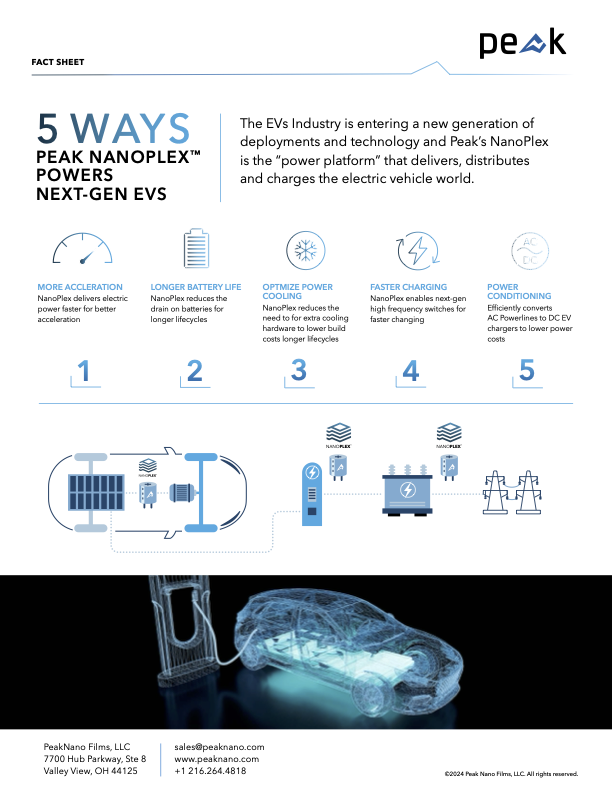
Peak NanoPlex™ capacitor films give DC fast charging stations faster, cooler, and more reliable performance than traditional capacitors.
By holding full strength up to 135°C with no derating and maintaining low dissipation, NanoPlex reduces the need for oversizing and heavy cooling hardware. The result is that the charging runs cooler, quieter, and operates more efficiently, while lowering overall station costs.
- Stable operation up to 135°C with no derating
- Lower dissipation in high temperature environments for cooler, more efficient charges
- Smaller, quieter charges with reduced parts and cooling needs
- Extended service life with fewer replacements and lower maintenance costs
- Reliable buffering to absorb surges and ensure smooth charging
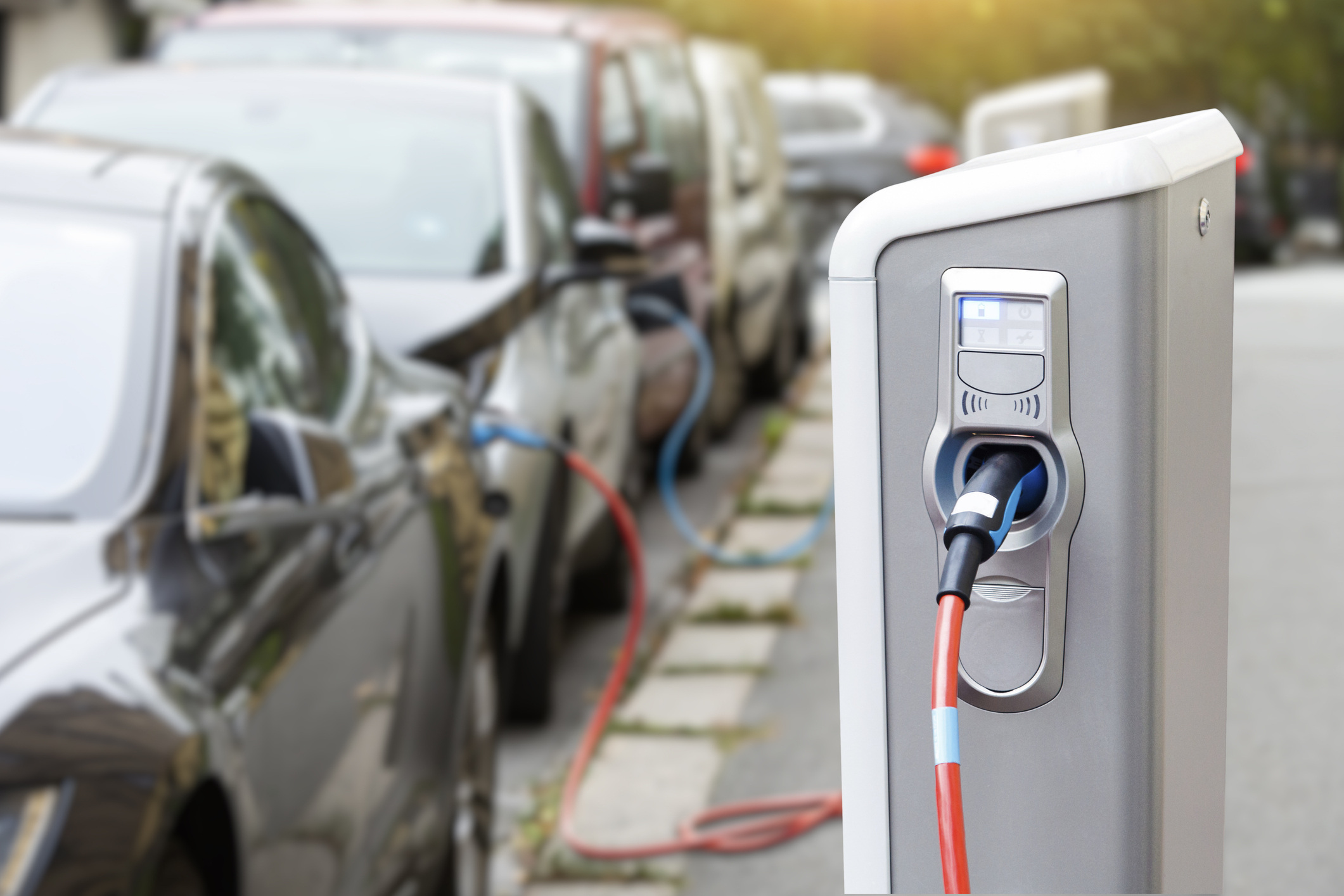
Start Exploring Peak Nano's Electric Vehicle Solutions
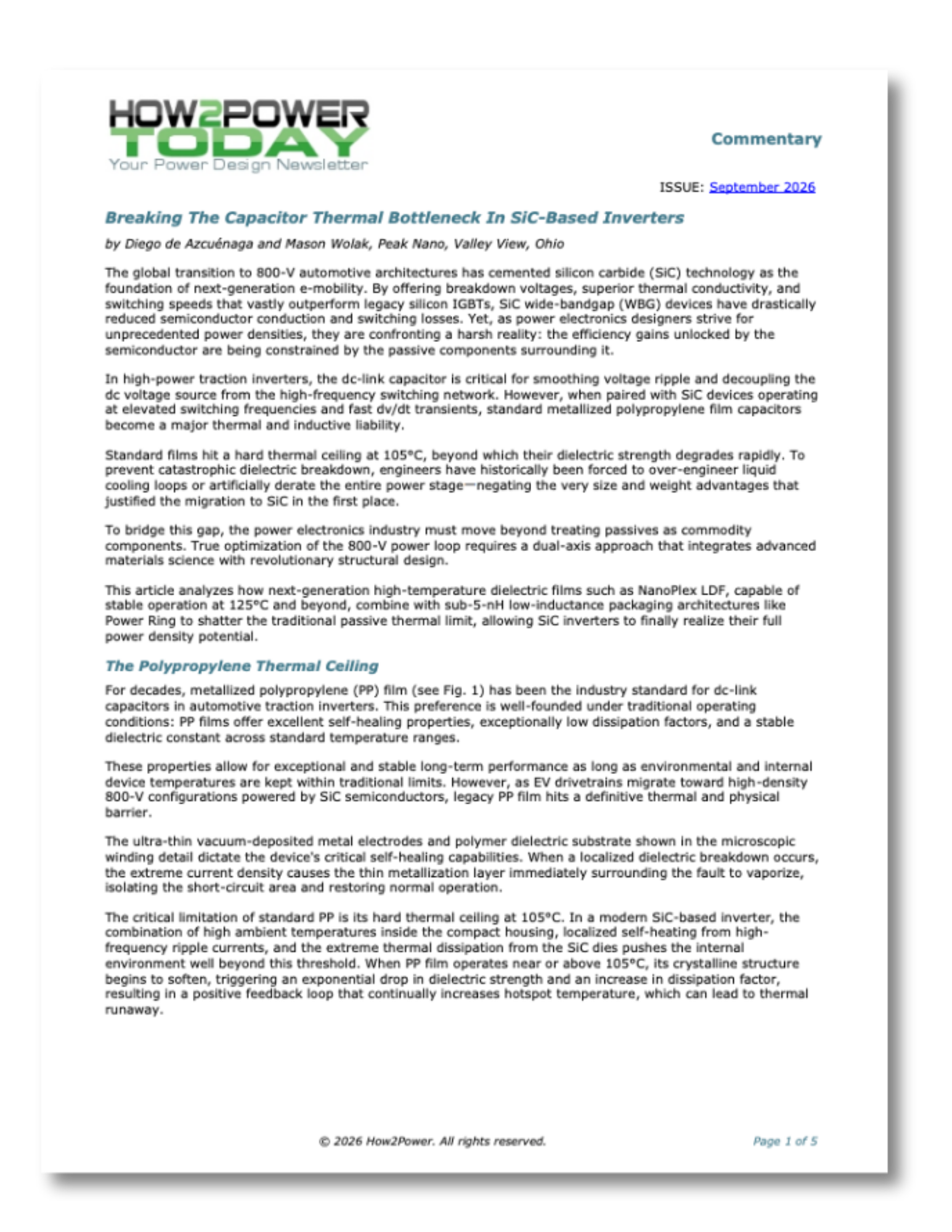
Technical Paper
Breaking the Capacitor Thermal Bottleneck in SiC Inverters
Partner Brief
Peak Nano x Advanced Conversion: Building the DC Link 800V+ SiC E-Mobility Demands