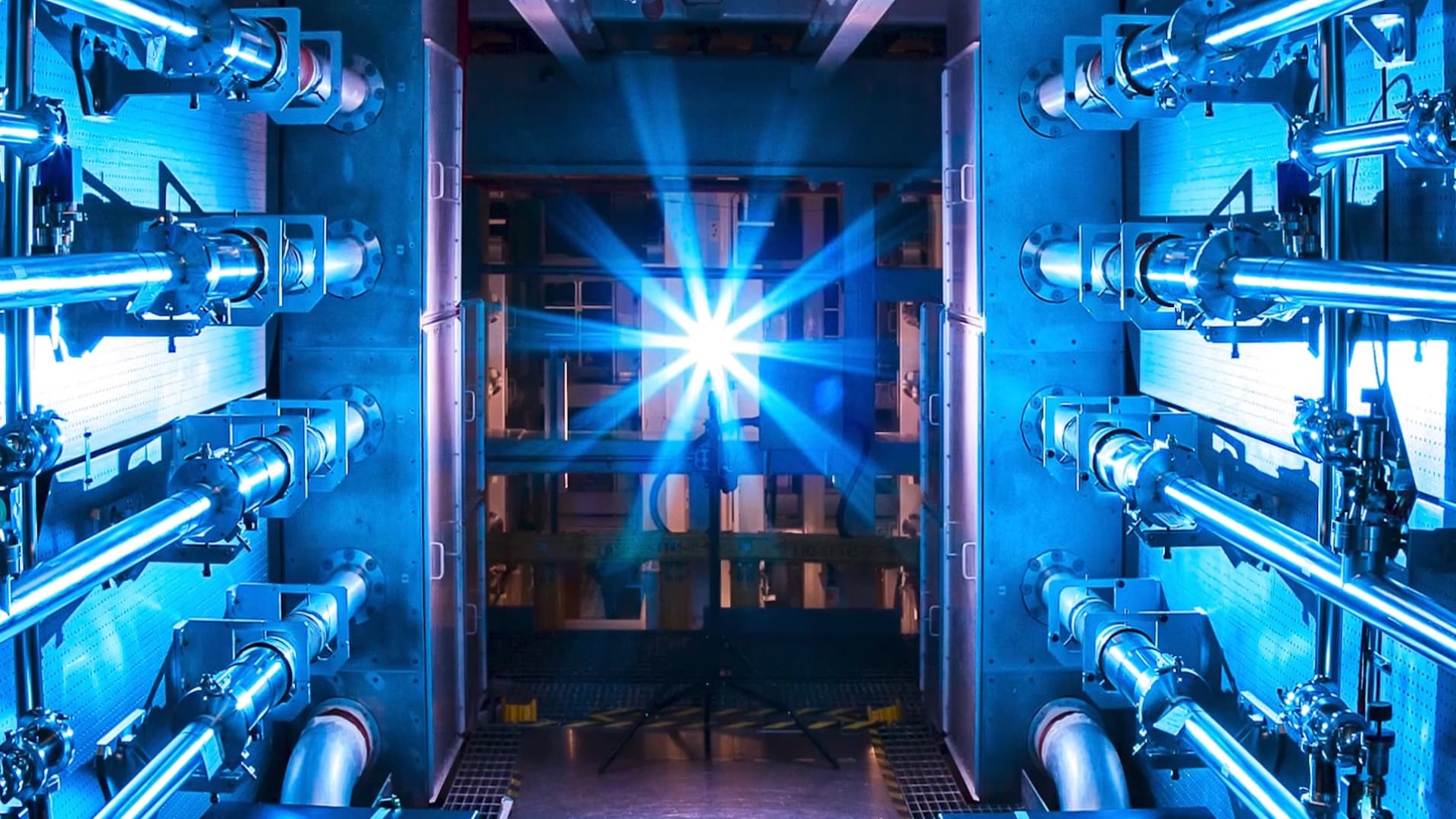
Inertial Confinement Fusion (ICF)
Peak NanoPlex™ capacitor films deliver higher shot energy, denser storage, and longer life at high repetition rates.
NanoPlex™ Delivers Consistent Pulse Power for Fusion Energy
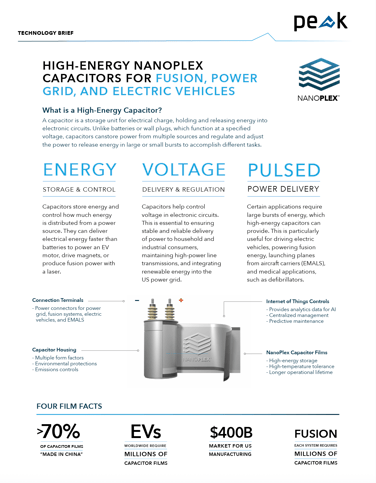
Peak Nano’s high dielectric constant (HDC) films are built for the extreme pulse demands of inertial confinement fusion. NanoPlex enables smaller, lighter capacitor banks that run cooler and last longer without sacrificing shot energy or pulse precision.
- Higher shot energy
- More energy packed into every pulse for stronger fusion output
- Delivers greater power in the same footprint
- Lighter capacitor banks make it easier to integrate and install
- Fewer components, less material, and reduced cooling
High-Speed Pulse Delivery Without Signal Drag
- As shot rates increase, delivering clean, high-energy pulses at nanosecond speed becomes harder. Traditional capacitor banks are too bulky and complex, leading to timing errors, distorted pulses, and lower shot yield.
- Peak Nano’s HDC capacitor films store 4x more energy in half the space. They shorten current paths, reduce signal interference, and simplify layouts, supporting high-speed, high-precision pulse delivery.
- Fusion teams can hit energy targets with fewer modules, cleaner layouts, and tighter synchronization, enabling more shots, faster progress, and better fusion results without reengineering their systems.
High-Density Energy Film = Compact Capacitor Banks
- Traditional capacitor materials require bulky designs to hit energy targets. These oversized banks eat up space, block access, and make it harder to scale or upgrade fast-moving fusion systems.
- Peak Nano’s HDC films store 4x more energy than conventional materials, fusion teams can shrink their pulse banks by up to 50%.
- Fusion operators can reclaim space, simplify integration, and speed up commissioning. With a smaller footprint and higher energy density, systems become easier to expand and maintain.
Extended Service Life, Accelerates Pulse Progress
- Peak Nano’s HDC capacitors are engineered for pulse durability, maintaining performance even under intense fusion shot cycles and elevated heating from high current discharge.
- Repeated high-current pulses and internal heating cause drift, degradation, and premature failure, forcing frequent maintenance and reducing system stability under heavy use. However, HDC tolerates these conditions without issue.
- Operators can extend service intervals, reduce downtime, and improve reliability during continuous shot campaigns, accelerating fusion progress while cutting long-term costs.
Compact Power That’s Easier to Deploy
- To meet high-energy demands, traditional capacitor banks must be oversized and frequently replaced, driving up component count, installation time, and lifetime operating costs. These expenses slow progress and delay critical milestones.
- NanoPlex HDC films' high dielectric constant allows for smaller, high-capacity modules that reduce the total number of racks, interconnects, and mounting hardware. This simplifies assembly, shortens current paths, and cuts installation time in tightly packed or upgrade-constrained fusion environments.
- With fewer parts, lower labor requirements, and longer-lasting components, Peak Nano helps fusion teams expand capacity faster, hit budget targets, and reach commercial viability sooner.
Fusion Without Foreign Dependence
- Fusion programs rely on a fragile supply chain dominated by overseas producers. Around 70% of BOPP capacitor film comes from China, exposing fusion developers to unpredictable lead times, geopolitical risk, and costly delays for mission-critical components.
- Peak Nano’s HDC films are 100% engineered in the U.S. with materials sourced from trusted allied nations. This ensures dependable delivery, stronger compliance, and long-term supply chain resilience.
- Fusion developers gain a scalable, secure supply of high-performance capacitor film, without dependence on foreign sources. That means faster procurement, fewer disruptions, and a direct path to national energy goals.
Fusion Energy Resources
ICF Capacitor Film Comparison: NanoPlex™ HDC vs. Traditional Films
Peak Nano’s HDC film technology delivers more power in less space, with greater thermal endurance and faster delivery. For ICF systems pushing pulse limits and scaling toward commercialization, NanoPlex offers a drop-in path to smaller banks, faster shots, and lower cost of ownership, without reengineering.
| Capability | Traditional Capacitor Film (e.g., BOPP) | NanoPlex HDC Film |
|---|---|---|
| Energy Precision | Lower energy density forces larger, more complex layouts, reducing pulse precision. | Stores 4x more energy in the same footprint; enables tighter pulse control and shorter pathways. |
| Power Density | Requires oversized banks to reach the target energy, increasing space, weight, and complexity. | Enables banks that are 50% smaller and 30% lighter, with no layout retooling needed. |
| Shot Life | Degrades under heat and stress; frequent maintenance and drift during high-frequency use. | Designed to withstand intense, repeated pulses with minimal drift for up to 5x longer life. |
| Lower Cost | High part counts and replacement rates increase costs and delay scale-out milestones. | Fewer parts, smaller assemblies, and longer life = up to 60% lower BOM and install costs. |
| Supply Chain | ~70% of supply comes from China, with geopolitical risk, long lead times, and compliance issues. | 100% U.S.-engineered with allied-sourced materials for secure, compliant, scalable access. |
Ready to Evaluate NanoPlex films?
Request a sample kit for in-house testing, compatibility evaluation, and pulse power performance validation in fusion applications.
Frequently Asked Questions for Inertial Confinement
Higher energy density films (e.g., 4x that of BOPP) allow for smaller, lighter, and more modular capacitor banks, which reduces footprint, improves layout flexibility, and supports faster commissioning without the need for major infrastructure changes.
Ready to Evaluate NanoPlex Films?
Request a sample kit of NanoPlex for in-house qualification, compatibility testing, and grid-level performance validation.