


Ignition proved the physics. A commercial plant has to repeat it every second for 30 years, and the hardware must go beyond the limits of the lab.
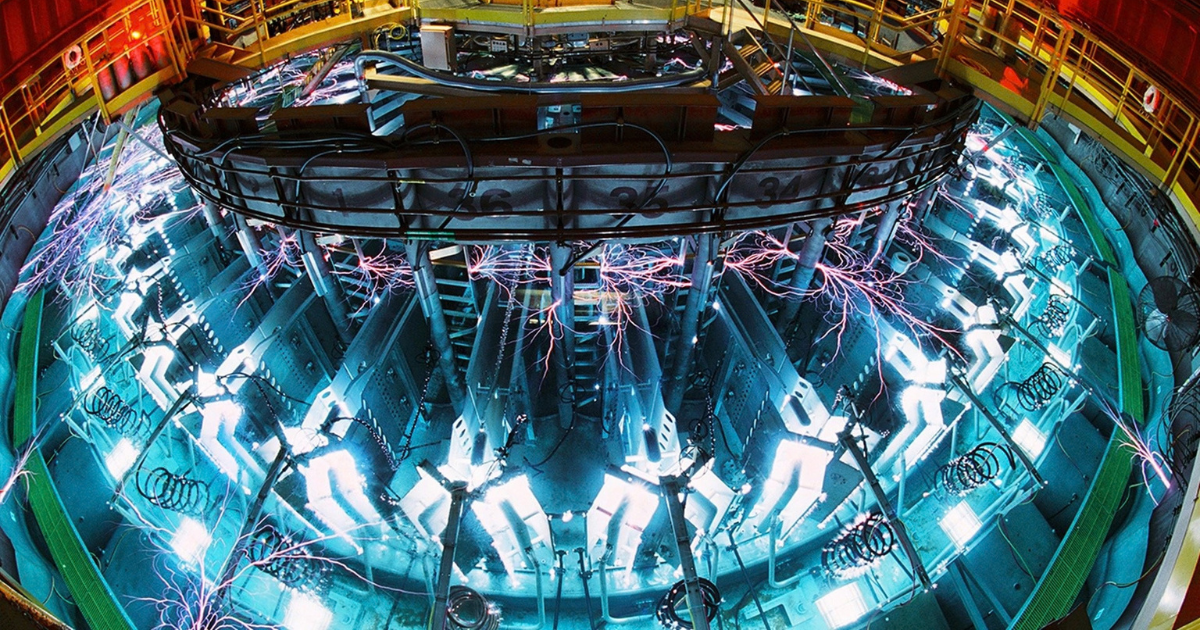
The National Ignition Facility’s April 2025 shot produced 8.6 MJ at a target gain of 4.13, and the Sirius pulsed power prototype at Lawrence Livermore has completed more than 3,000 shots. Those are real milestones. But a power plant firing once per second will log 31.5 million shots a year and more than a billion over a typical 30-year operating life.
That gap was the focus of Peak Nano’s recent webinar, Q>1, A Billion Times, with Alec Laws of Peak Nano, Caroline Sorrick of E&P Technologies, and Dave Chesny of Equilibria Power. The three companies discussed the mutual benefit that comes from co-engineering a pulsed power system from the dielectric film, qualified capacitor, and switches. Together, these systems largely determine the engineering success of the pulse-driver, as they must deliver energy with precise timing, repeatability, fast recovery, and decades of life.
Laboratory Hardware Won’t Survive a Power Plant
Today’s pulsed power components were designed for research facilities that fire a few hundred shots a year. Most capacitors still rely on BOPP film, which has a dielectric constant of about 2.2, breakdown strength around 700 V/µm, and begins to derate at 85°C. Most switches are gas-filled spark gaps, with electrodes that erode and gas that must be recycled after every shot. At plant repetition rates, film heats and loses usable voltage, banks grow to compensate, and switch maintenance becomes constant. Scaling up current designs won’t close the gap, meaning the materials and components themselves must change.
Energy Density Moves Everything Else
The most important lever sits at the very start of the chain: the dielectric film. Stored energy rises with a film’s dielectric constant and with the square of the voltage it can hold, so a better film improves the entire system downstream.
That is the role NanoPlex™ HDC is built to fill. Using nanolayer coextrusion, Peak Nano arranges commercially available polymers into precision nanolayer structures that trap charge, which suppresses space-charge buildup and electrical treeing. These nanolayers also improve thermal and structural durability in conditions beyond typical polymer films. HDC 3125 and HDC 4125 deliver dielectric constants of 3.7 and 4.8, roughly twice BOPP, while consistently reaching 800 V/µm or higher, and operating up to 105°C without derating.
The ripple effects are significant. Higher energy density means smaller capacitor banks, which can sit closer to the load. Shorter current paths mean lower stray inductance, which supports faster, more consistent pulse delivery. More thermal headroom reduces the need for cooling and extends shot life. For a fusion designer, a better film ultimately means a smaller, faster, more reliable machine.
Reliability Has to Be Engineered In
At a billion shots across thousands of capacitors, some failures are inevitable. Film-foil capacitors don’t self-heal, so the strategy is to prevent failures where possible and contain them when they happen. That means operating well below breakdown strength, where HDC’s higher margin helps, along with void-free oil impregnation and modular banks that isolate a failed unit without taking down the system. E&P Technologies is building this approach into its NanoPulse capacitor line on NanoPlex™ HDC.
Proving lifetime is its own challenge, since no one can wait decades for test data. The answer is accelerated testing, many samples in parallel, and statistical extrapolation, all run against the actual switch waveform. Switching is evolving too. Stackable solid-state modules like Equilibria Power’s SP2000, paired with IEEE 1588 precision timing, can synchronize systems within nanoseconds with no gas to recover and no electrodes to replace.
The Supply Chain Has to Be Built Now
Roughly 70% of BOPP capacitor film comes from China, while new pulsed power systems are far larger than earlier demonstrators and will require tens of thousands of capacitors each. A fusion industry built on that dependence carries real risk. NanoPlex™ HDC is U.S.-engineered on an allied-nation supply chain, and the webinar panel itself reflected a domestic film-to-capacitor-to-switch pathway.
The message for fusion teams was direct. Define waveform, rep rate, and lifetime targets early, engage suppliers from day one, and buy for the plant you intend to build, not the next prototype. Fusion has proven it can ignite. Proving it can fire a billion times will depend on the film, the capacitor, and the switch being engineered as one system.
Watch the full webinar: Q Greater Than One, A Billion Times. To evaluate NanoPlex™ HDC for your pulsed power system, contact Peak Nano.